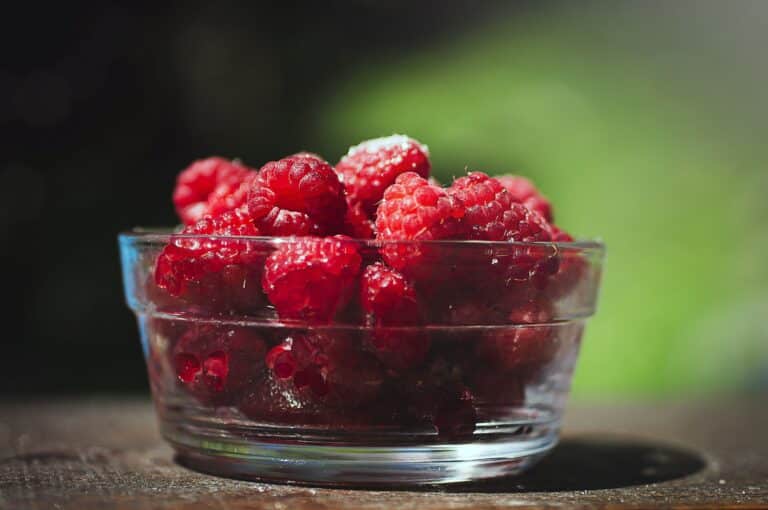
A bowl of raspberries. – Pexels
Scientists discover sugar floating in space, wonder if it points to other life molecules.
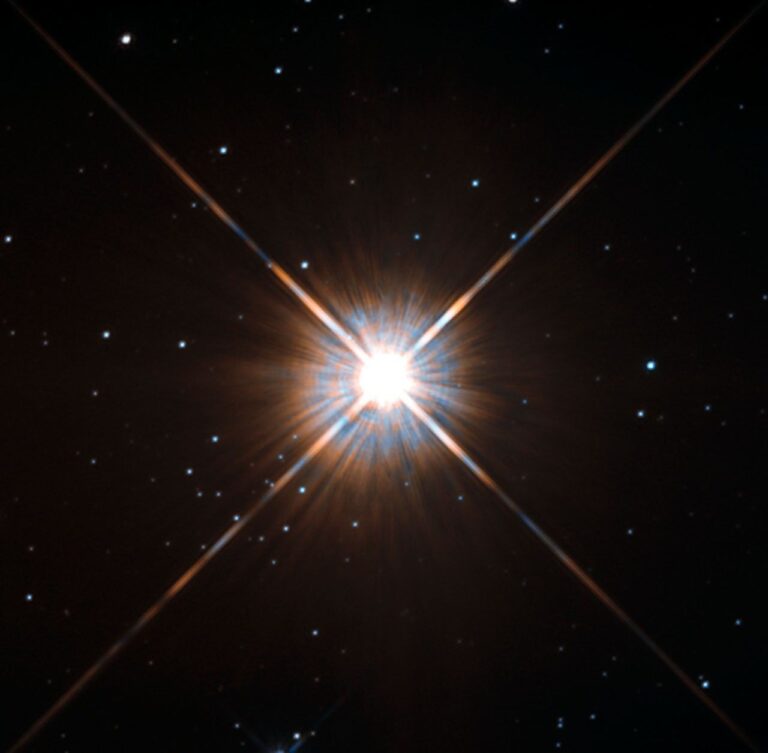
Pour a little sugar on me? Astronomers might have thought that when they discovered a natural sugar floating in dust and clouds near the Milky Way galaxy’s center.
Researchers in Spain’s Center for Astrobiology in Torrejón de Ardoz, Madrid, detected the sugar, a four-carbon-atom simple sugar, or ketose. It exists in tiny amounts in red raspberries and in some self-tanning lotions.
Sugar powers living systems, including the ones in people, and is a pillar of human DNA, and RNA.
Center for Astrobiology astronomer and the study’s lead researcher Izaskun Jiménez-Serra told The Guardian the findings, the first sugar to be detected in interstellar space, showed space sugars were more abundant than previously thought.
Looking broadly, the discovery may mean space can, or does, harbor other life-origin molecules. Although they’ve known sugar’s importance for sparking life, scientists had so far failed in lab experiments to recreate the conditions to produce sugar molecules like the ones discovered.
The Center for Astrobiology said scientists couldn’t synthesize the gas-phase rotation, in which spinning molecules in the gas state interact with electromagnetic radiation and change frequencies. The researchers also said sugars are heat-sensitive and retain water, which makes them hard to manipulate and vaporize.
The Center for Astrobiology researchers, who published their findings in the journal Nature Astronomy, used two radio telescopes, one at the Institute for Radio Astronomy in southern Spain, one in the Yebes Observatory north of Madrid in central Spain, to study G+0.693−0.027, a molecular cloud about 27,000 light-years from Earth. They compared the radio wave data, and the sugar’s molecular signature, with erythrulose’s wavelength pattern, gauged in the laboratory.
In a statement, the researchers said this sugar is at least eight to 17 times more abundant than similar three-carbon sugars, which the researchers didn’t detect in the same region.
The Center for Astrobiology team said its researchers, working with University of Extremadura in Southern Spain and Radboud University in the Netherlands, also found that erythrulose can form in interstellar ice particles or dust grains from simpler aldehydes and two-carbon alcohols.
In the report, the researchers wrote that monosaccharide sugars, such as glucose and ribose, may have existed in the interstellar medium, a gas and dust expanse between star systems, because scientists had found them in asteroids and meteorites. They called the interstellar medium “an impressive chemical factory” in which researchers had found 340 molecules, though previously no sugars.
In 2023, scientists had spotted sugars on grains of the Bennu asteroid that NASA’s OSIRIS-REx spacecraft had gathered, but not 2-deoxyribose, a sugar used to build DNA. Researchers told Space.com this sugar’s absence supports the RNA world hypothesis, which posits that early life first relied on RNA, then proceeded to DNA and proteins as they evolved.
The Center for Astrobiology’s findings show sugar can form before planets take shape or stars are born, without life.
“(The discovery) … takes us to a higher level in the ladder of interstellar chemical complexity,” the researchers wrote, “suggesting that other prebiotic … molecules could also form and survive under the extreme conditions of the (interstellar medium).”
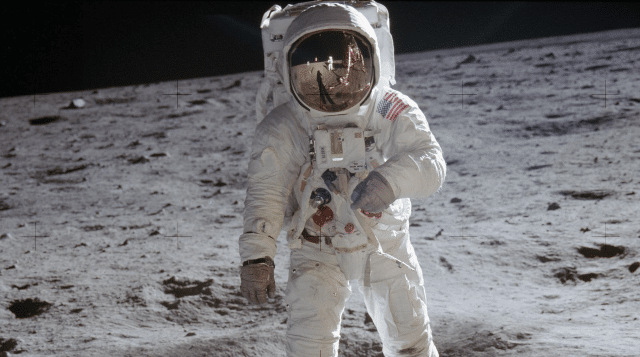
The study said Earth could have received half a million to 50 million metric tons of erythrulose during the Late Heavy Bombardment from 4.1 billion to 3.9 billion years ago; asteroids pummeled our solar system’s inner planets during this stretch. NASA reports that this theory emerged from the moon’s crater record and from analyzing lunar material Apollo astronauts have returned to Earth. But NASA added that scientists have increasingly questioned the Late Heavy Bombardment theory, arguing that the period was briefer than once estimated.
The Center for Astrobiology’s finding continues a raspberries-and-the-galaxy’s-center theme, Science Alert noted. Scientists had earlier found ethyl formate amid the stars, a compound that figures in raspberries’ distinctive flavor.
“This chemistry is weird and unexpected, meaning it goes against our chemical intuition,” Massachusetts Institute of Technology chemistry professor Brett McGuire told Chemical and Engineering News. “That’s exciting because it opens an entirely new avenue to explore, and it might give us clues for other larger, more complex sugars that we should be looking for. Maybe we should reexamine how we thought about simple chemistry as well.”
***
RELATED: To the moon and back.
***
Have a writing project ready for takeoff? Nova Arc Content Co. can write, edit, proofread, or format it. Schedule a meeting with us or check out our services to see what we can do for you.
***
SOURCES
- Ahart, J. “First ‘True Sugar’ Molecule Found In Space — Offering Hints To Life’s Origins.” Nature. Published July 13, 2026.
- Alberts, B, Johnson, A, Lewis, J. et al. “The RNA World and the Origins of Life.” National Library of Medicine, excerpted from “Molecular Biology of the Cell. 4th edition.” Published March 1, 2002.
- Harvard & Smithsonian Center for Astrophysics. “Chiral Molecules in Space.” Published August 5, 2016.
- Dzombak, R. “A Sweet Surprise: Scientists Find Sugar Deep in Our Galaxy.” The New York Times. Published July 13, 2026.
- Georgescu, A. “Astronomers Detect Sugar in Interstellar Space for the First Time.” Chemical and Engineering News. Published July 13, 2026.
- Gronstal, A. “Rethinking a Critical Period in Earth’s History.” Astrobiology at NASA. Published January 29, 2018.
- Hashemi, S. “In a First, Astronomers Find Sugar in the Space Between Stars, Providing New Clues About the Origins of Life on Earth.” Smithsonian magazine. Published July 16, 2026.
- Hunt, K. “Astronomers Detect Sugar in Interstellar Space for the First Time.” CNN. Published July 14, 2026.
- Jiménez-Serra, I., J.G., de la Concepción, H. Cuppen, M. Rey-Montejo, M. Sanz-Novo, V.M. Rivilla, et al. “Detection of a Four-Carbon Sugar in Interstellar Space.” Nature Astronomy. Published July 13, 2026.
- Kuthunur, S. “NASA Discovers ‘Space Gum’ And Sugars ‘Crucial To Life’ In Asteroid Bennu Samples Brought To Earth.” Published December 3, 2025
- Leasca, S. “Space Might Taste Like Raspberries, Scientists Say.” Food & Wine. Published July 21, 2026.
- Paul, A. “Sugar Discovered Floating In Deep Space for the First Time.” Popular Science. Published July 13, 2026.
- Ramakrishnan, A. “In a Sweet Discovery, Astronomers Find Sugar Lurking in the Space Between Stars.” The Associated Press. Published July 13, 2026.
- Sample, I. “Space Jam: Astronomers Detect ‘Raspberry Sugar’ On Dust Cloud In Milky Way.” The Guardian. Published July 13, 2026.
- Science Direct. “Rotational State.” Cited July 21, 2026.
- Siegel, E. “Sugar in Space: Another Step Toward Life’s Origins.” Big Think. Published July 20, 2026.
- Spanish National Research Council. “Sugar in Interstellar Space.” Published July 13, 2026.
- Starr, M. “The Center of Our Galaxy Is More Like a Raspberry Donut Than We Realized.” Science Alert. Published July 14, 2026.
- Starr, M. “Loads of Precursors For RNA Have Been Detected in The Center of Our Galaxy.” Science Alert. Published July 8, 2022.
- Strickland, S. “Historic Asteroid Sample Reveals The ‘Building Blocks Of Life Are in Fact Extraterrestrial in Origin,’ Scientists Say.” CNN. Published January 9, 2025.